

[Note: This article contains Affiliate Links.]
By age 8, I hope your child has learned to read fluently. (If not, don’t be ashamed to get help. Luckily, we have Siegfried Engelmann’s expert assistance in Teach Your Child to Read in 100 Easy Lessons for $28.)
Around age 8, we switch from learning to read to reading to learn. The books on this list are still first-rate fun. They take your child deeper into what all great literature primarily uncovers: human nature. They ask what it means to be good, what truth is, and how to find beauty in a world that seems to want to block access to it.
In this post, I’ve explained my thinking behind all the books I placed on the list. The full table is at the end of this post.
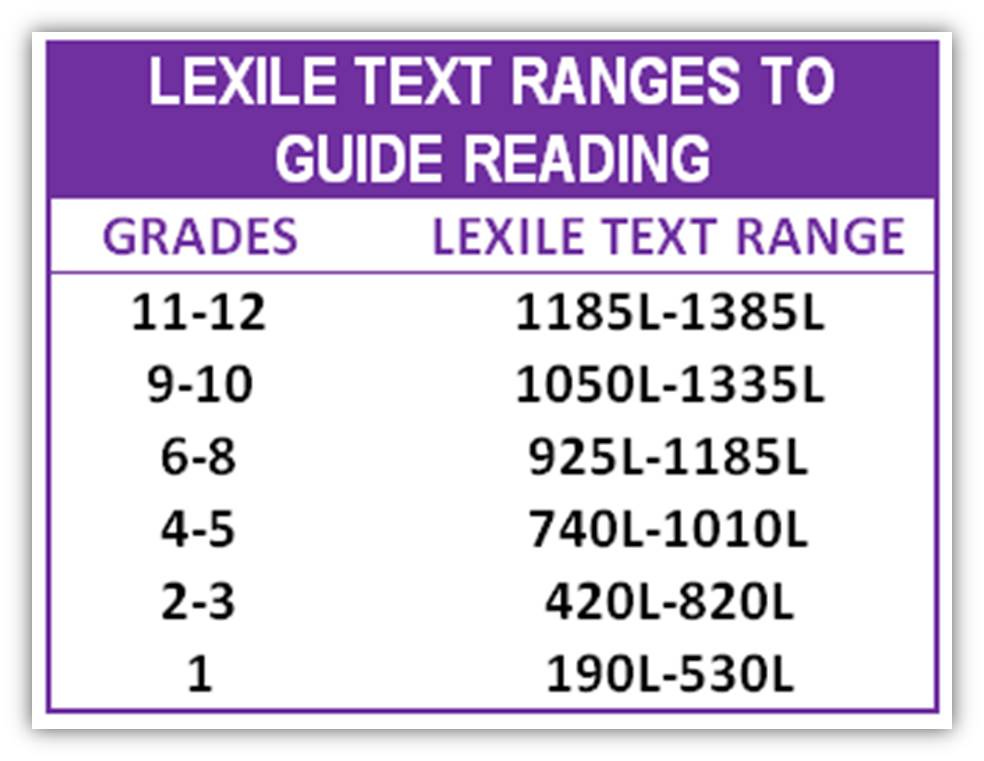
I include lexile scores on this list. A book’s lexile level is a way to measure its reading difficulty. Do not let the number intimidate your kid, but don’t ignore it either. If your child picks a book that’s interesting to him but is way too hard, he won’t be able to follow it and will lose momentum. It’s okay for a kid to put a book down and switch to something else until he’s ready; the more he reads, the more capacity he builds for harder books. Also, it’s okay if he doesn’t understand every word. If the story is a stretch in terms of vocabulary, as long as his comprehension is there, he can still enjoy it, and it will improve his vocabulary. It takes 15-ish exposures to a word in context before you fully understand it. Using the word in conversation or writing shrinks that time frame, so if you want to go the extra mile, record the words you don’t know. Post them on the kitchen wall and try to use them in dinner or breakfast conversation.
If the lexile is high but your child is interested in the content, reading to her will make it accessible. Just as infants learn language by hearing us use words in context, your child will learn new words by listening to us read them with context. I know it’s hard to put down your device or turn off the TV after a long workday and read, but it’s worth it. There will likely be words in some of these books you don’t know, so you might actually enjoy reading them in the morning when you get up, just a few pages worth, on a device. The Kindle app has a helpful dictionary — but there may be some anachronisms that even it won’t have. I run into them occasionally when reading older titles.
If you have a weak reader with high interest in a particular subject, don’t be afraid to read the book to him while he does something else that doesn’t require intense concentration. Maybe he’s drawing or tightening the trucks on his skateboard or doing routine bike maintenance. Your voice delivering the words in the book with accurate tone and pronunciation go a long way in aiding overall comprehension.
As a teacher, I attempt the tricky job of talking to the adult growing inside the child. None of these books are for babies. Some of them deal with heavy themes; Old Yeller and Where the Red Fern Grows still make me weep. Roald Dahl spent his life warning us about monsters, the very real, very human kind. My best advice? Even if you feel your child is not mature enough to cope with heavy themes, try not to shy away from them. Instead, use your wisdom and your family’s values to guide your child’s understanding. My own children’s sensitivity and sound judgment has often surprised me, warming the cockles of this cynical heart. Of course, parents should be the final arbiters of the appropriateness of any media their children consume. (This is my way of tricking you into pouring yourself a hot cup of coffee, sitting in a comfy chair when the kids are still asleep, and reading one of these in the cool quiet of a softly gilded dawn.)
Before we move on, a note: due to Amazon’s business practices, I no longer share their links unless I can’t find a title new anywhere else. For families on a budget, you can find nearly all of these titles from used booksellers on eBay such as ThriftBooks, World of Books, and On Time Books. I have no affiliation with these stores; I just want families to get more books in their homes. Having said that, I am now an affiliate with bookshop.org, and all my links below link to titles in their store. Here’s my storefront if you like browsing cover art.
Here’s the thing: there are 150+ books on this list. I’ll give it to you in its entirety below, but I’ve also broken it up into chunks to make the good stuff (which is anything you think will hook your kid) more easily accessible.
Adventure
When I was a kid, Marko Ramius was my hero. I read Tom Clancy’s The Hunt for Red October when I was 11. (This actually explains a lot about me.)
An author’s primary job is to create characters with whom a reader can identify. The character might be a good guy, like Ramius, or a bad guy, like Tupolev, but a skilled storyteller writes characters in such a way that his reader sees aspects of herself in all of them. Now, I’m not a white Russian (Lithuanian!) military man, but Ramius’s steadfast morality in the face of near insurmountable odds in service of justice (and revenge) and Tupolev’s overwhelming ambition and sense of betrayal at his teacher’s treason resonated within me even as a child. I understood Ramius. I understood Tupolev. I know them better now and have a fuller understanding of the system that could create them, but even at 11 I could see that under a certain set of circumstances, I could turn out like either man, minus the nuclear submarines (probably).
Adventure is out there. Men and women make it. These books are a road map not only to the qualities of human greatness our public schools seem intent on destroying, but to the possibility of a life well and truly lived.
Parents are scared. They don’t want to let their kids out on walks to the neighborhood store or allow them to ride their bikes to baseball practice. Books are one place we can free our kids to adventure widely — but I’d encourage you to free them more often in the real world. Our kids can learn how to take risks and face danger (and loss) in the imaginative world of a great story even when we parents are afraid to let them go.
Animal Stories
Reading All Creatures Great and Small is a core memory for me. It’s what gave me the drive to get myself to England for university which also taught me a lot about what it was like to be really, really poor. (Jude the Obscure was the perfect book to read while I was there.)
I was 10 when I picked up Herriott’s first book. Three chapters in I’d resolved to become a large animal vet somewhere in the countryside, hopefully in a place just like Yorkshire where the esteemed English veterinarian spun his tales of horses, cows, dogs, cats and revealed deep affection for his fellow man and the beauty of the green, rolling hills of Northern England.
My chromosomes are decidedly XX, but I identified strongly with the boys who made dogs like Old Yeller and Shiloh and Old Dan and Little Ann playmates, work colleagues, and best friends.
And then there are the books told from the animals’ point of view, like the unmissable Watership Down which taught me a lot about rabbits, but a lot more about humanity. I identified with those rabbits, their fears about a changing world, their loyalties and conflicts, and their willingness to risk everything for a better life for their progeny.
Your children will identify with all of these characters too and be better people for it.
Anthologies
I’ve included quite a few anthologies of stories and poems here. However, I’d be remiss if I didn’t strongly urge you to get your child familiar with fairy tales — especially Grimm’s — as well as Greek, Roman, and Norse mythology, and the collected classics of the English language, both British and American.
If you’re trying to handle a kid who’s had way too much screen time or trying to get an older kid hooked into reading, it’s worth it to go back to my list for Young Americans Aged 3-7 and pick up collected stories from the lists there. (ProTip #2: after you read a bedtime story — yes, this will work with older kids too — go back to the table of contents and ask which story they might want to read tomorrow night, then leave the book in their room and the light on.)
I’ve also included the McGuffey’s Eclectic Reader series. If you’ve got a willing kid, and you’re a believer (or tolerant of Christian-themed morality tales), McGuffey is a one-stop shop for the humanities-driven one-room schoolhouse, which homeschooling effectively is. These books were used for ages until the Progressives under John Dewey decided that the children would lead us toward the Romantic ideal and upended our school system which, up until then, had produced the most literate country in the world.
Autobiography & Biography
These books are all about great men and women. Some of them are long, heavy works, but if you want your child to be a great American, she should have familiarity with other great Americans and great people in general. Teddy Roosevelt himself stepped into the breech with his good friend, Henry Cabot Lodge — another American giant — to bring children Hero Tales of American History.
A very important young person is here too. Someone who didn’t know the impact she’d have; someone who couldn’t know. Everyone should read her diary, especially now that many schools are removing it from their curriculum to be studied in class. Of course, I’m talking about Anne Frank.
Drama
The Bard is here, as is Edmund Rostand’s inimitable, tragically flawed, but wonderfully magnanimous Cyrano de Bergerac. I’ve also included here a play that should be unmissable but few American children have heard of, let alone seen or read: the wonderful story of an extraordinary teacher, Annie Sullivan, and her incredible student, Helen Keller, that is, The Miracle Worker.
Fantasy
For the reluctant reader, this section, Animal Stories, and Science Fiction will likely be your moneymakers. I credit Brian Jaques for getting my 9-year-old hockey-playing thug son obsessed with fiction with the brilliant story of a hero mouse, Matthias.
Again, I am not a librarian, so you might quibble with the placement of these titles. I apologize if you are more Type A than I am, but I’m a little bit like Mrs. Frisby, panicking at the sound of the tractor coming all too early to the field because we’ve got a nation’s worth of kids to save.
Fiction
When I was a girl, I fell in love with Elizabeth Taylor. Well, really I fell in love with Velvet, the eponymous character Taylor played in National Velvet. A neighborhood mom had taken pity on my parents and bought us a book of tickets to go see the very old movies screened during summer days at our local movie theater. After I saw the movie, I borrowed the book from the library. National Velvet inspired my lifelong love of horses and the idea that any dream, given courage and perseverance, is achievable.
Most of the books here are simple stories that teach what it means to become a good person or, in the case of Milo from the hilarious Phantom Tollbooth, just a less whiny one. From the now little-known Story of a Bad Boy and the laugh-out-loud Penrod to beloved novels like Little Women and The Secret Garden, I’ve collected some of the books our forebears leaned on to teach their children to be good kids.
This is also where I placed general, more modern fiction. Most of these titles are familiar and popular. All have important lessons to teach. Roll of Thunder Hear My Cry and Animal Farm and To Kill a Mockingbird are here, as is my personal favorite, a book I read to my grandmother as she lay dying in hospice and which I recommend to all the mothers and daughters who read this post: Mama’s Bank Account by Kathryn Forbes. Many of these are more appropriate to older children, but you will know best, just like Forbes’s Mama did.
History and Historical Fiction
The undisputed champion of this list is a man with whom most Americans are unfamiliar, to their great detriment: G. A. Henty, who penned some excellent historical fiction in the late 19th century that placed a young American-ish man in the middle of some of the most important historical moments ranging from the Romans to the Vikings to the Britons to the American Civil War. Reading level is high, but the stories are excellent.
The heroes of many of these books are young men, but there are stories of astonishing young women here too. If your children want to read about young people daring greatly, they’ll find inspiration here.
Additionally, these are a great introduction to crucial moment in Roman, French, British and American history because they focus in a singular individual and supply the emotional hooks that history books sometimes cannot.
Having said that, though, I’ve included two amazing history books written for children by fathers, V.M. Hillyer and Hendrik Van Loon, who saw that none of the books holding the most important stories of humanity were written with children in mind. They did their children and all of us a huge service.
Science Fiction
Pure (dystopian) fun. These books are highly accessible to all readers.
I strongly recommend you take the time to re-read Fahrenheit 451. You’ll see and appreciate Ray Bradbury’s unbelievable prescience.
And a note for all of you: he warned us about screens too, all the way back in 1950. His short story, “The Veldt” is a must-read for modern parents. It’s a cautionary tale that families should read and discuss together. Rich in metaphor and deep in meaning, it will give you pause before you pay for that next monthly unlimited cell phone plan for your children.
Western
Here you’ll find stories of normal people, fighting the land, other men, and themselves and winning against all odds. But these stories remind us there’s always a cost, sometimes one that is too great for one man to bear. And yet, he still fights when fighting is the right thing to do.
Find America, in all its glory and sacrifice and liberty, here.
The Full List
Merry Christmas, America (and Canada!). And may God bless us, every one. Your gifts (Affiliate Links below):
If you appreciated this article, I hope you’ll consider buying me a coffee and contributing whatever you can. If you believe that my essays, podcasts, and lesson plans will be useful to American families recovering control of their child’s education (even if they can’t fully control their schooling) please consider subscribing to support my work. If you can’t afford to help, know that I intend to provide the most important posts to support you in teaching your own children free of charge.
Great booklists. Im still making my way through it but I love that you included Roald Dahl. My daughter has listened to all his stories including his autobiographies. What an excellent storyteller. Two of my children were late readers but audio books opened the doors to great literature for them so they never missed out and I had the benefit of listening along.
Another great intellect-development driver is hobbies. My dad had a basement full of model trains and -- even more importantly -- magazines *about* railroads and models. Because of that I was tested at 144 by age 13 and today I am an expert at creating "systems of systems including people," writing firmware and software that spans the entire range from single chips to agentic server clusters... because I was driven to understand those magazines and the words and diagrams they contained.